
The FEC–SIMSEA Youth Joint Seminar, held on 18 August 2025, brought together early-career researchers, students, and marine scientists across Asia and Oceania to explore how climate change biology informs our understanding of phytoplankton responses to warming oceans.
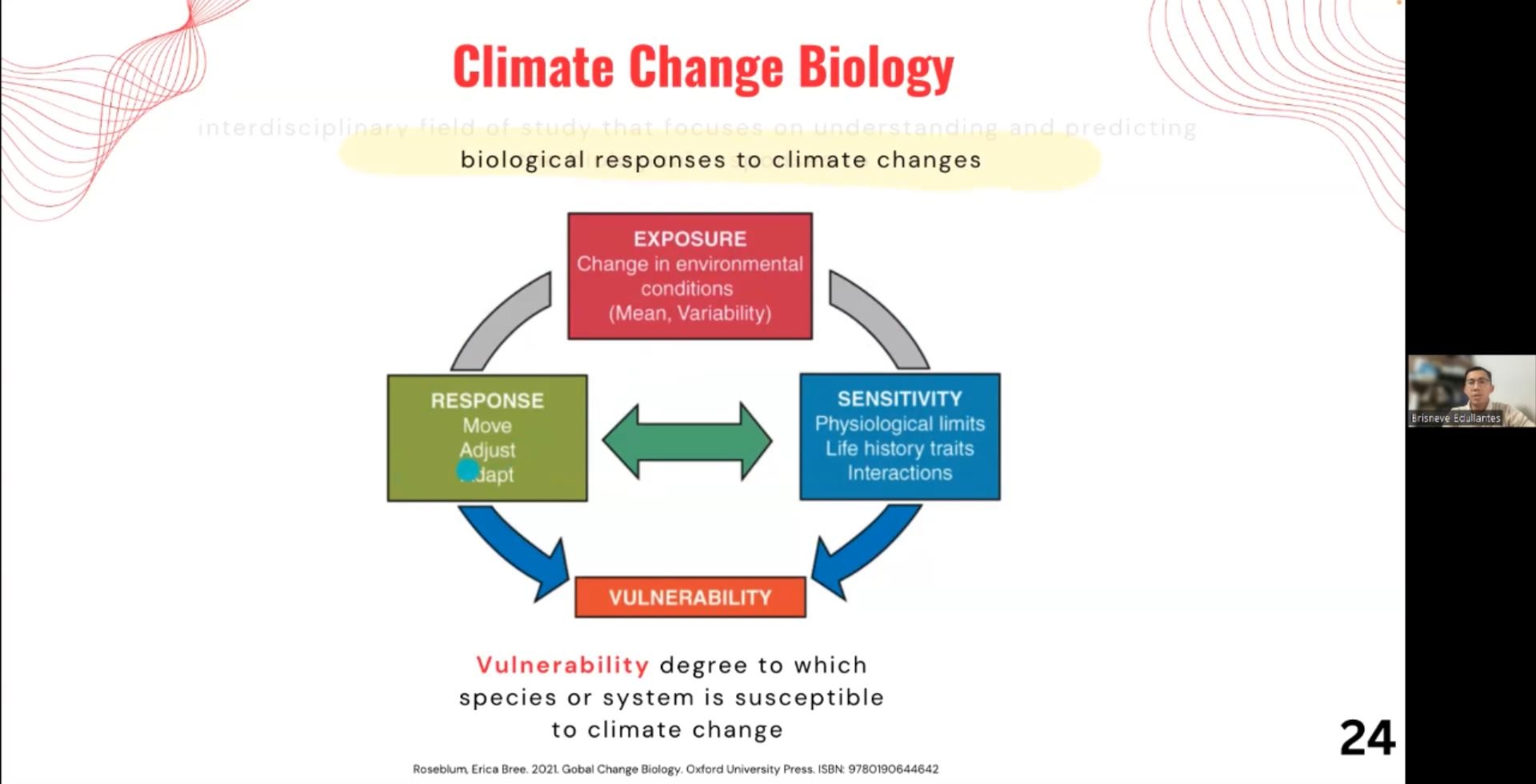
The keynote lecture was delivered by Dr. Brisneve Edullantes, Associate Professor at the University of the Philippines Cebu, whose research focuses on environmental biology and microalgal ecophysiology. Dr. Edullantes highlighted the pivotal role of phytoplankton in global primary production, oxygen generation, and carbon cycling, while emphasizing their vulnerability to rising temperatures and ocean acidification. These stressors are driving shifts in phytoplankton biogeographic ranges, and contributing to the increased frequency and severity of harmful algal blooms, with cascading impacts on marine ecosystems and coastal communities.
Through observational studies, laboratory and mesocosm experiments, ecological niche modeling, and participatory research, Dr. Edullantes demonstrated how multiple approaches can reveal the adaptability—and fragility—of phytoplankton communities under climate change. Key findings from his work showed that:
- Temperature strongly regulates phytoplankton growth and toxin production, with warming altering interspecific competition and community composition.
- Modeling approaches project shifts in species distributions and increased occurrence of harmful algal blooms in tropical regions under future scenarios.
- Collaboration across disciplines, from remote sensing to molecular biology, is essential to build predictive models and guide conservation.
The Q&A and Call to Action sessions engaged participants from across the region, who raised questions on research design, modeling applications, and opportunities for collaboration. Early-career researchers reflected on how to frame focused research questions, apply experimental and modeling tools, and link phytoplankton studies with higher trophic levels such as fisheries and food web dynamics. The discussion also emphasized the importance of long-term monitoring, interdisciplinary teamwork, and ensuring that research outputs inform management strategies and stakeholder needs.
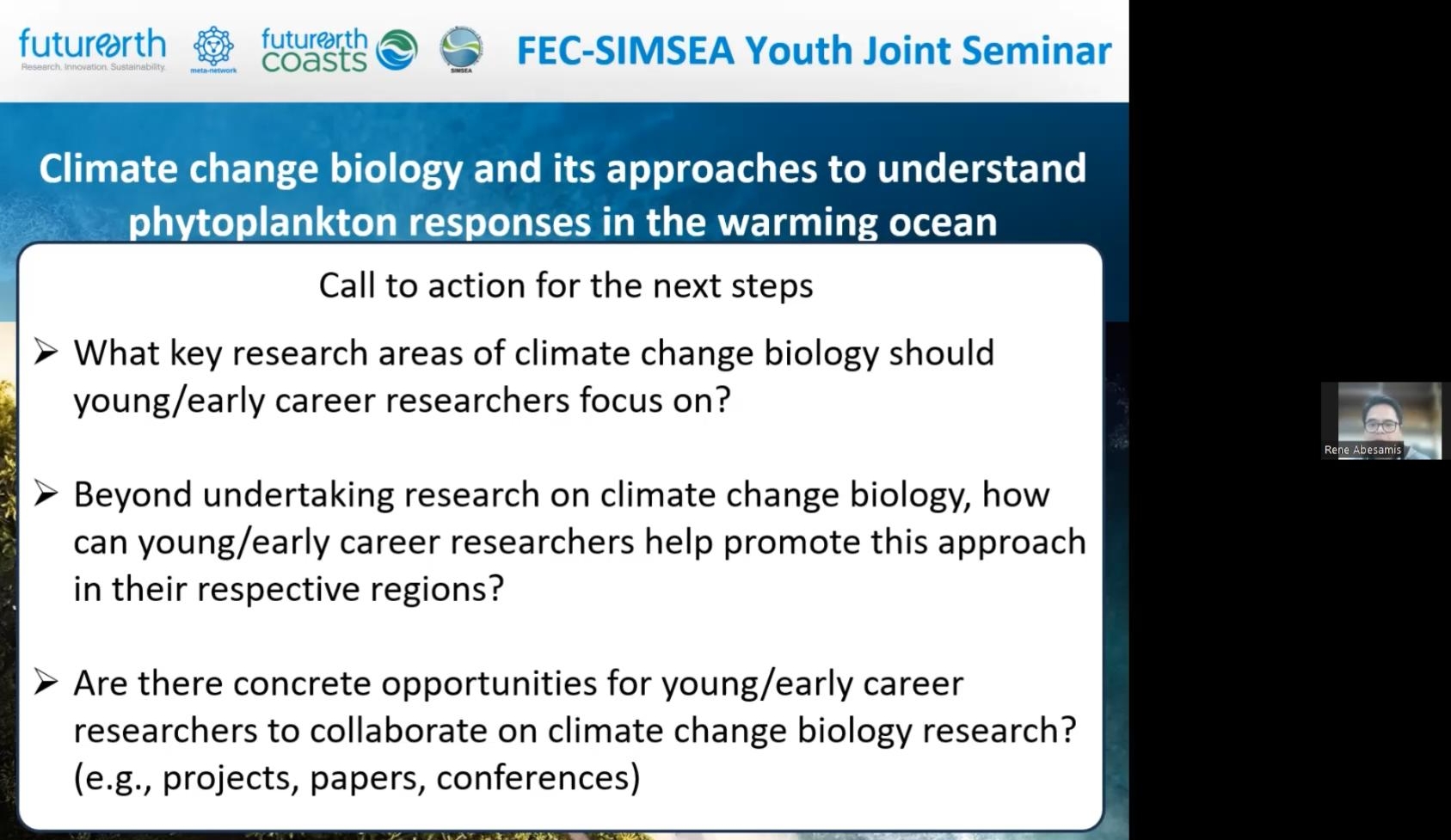
This joint youth seminar reaffirmed the importance of building research capacity among the next generation of marine scientists and underscored how climate change biology can guide adaptive strategies for sustaining ocean ecosystems.
This seminar series is part of the Future Earth-funded cross-cutting initiative “Meta-Network” – a collaborative platform connecting science, policy, and practice to advance coastal and marine sustainability. We welcome new partners from academia, NGOs, government, and industry to join us in co-creating inclusive, science-driven solutions. Get involved by contacting [email protected].