
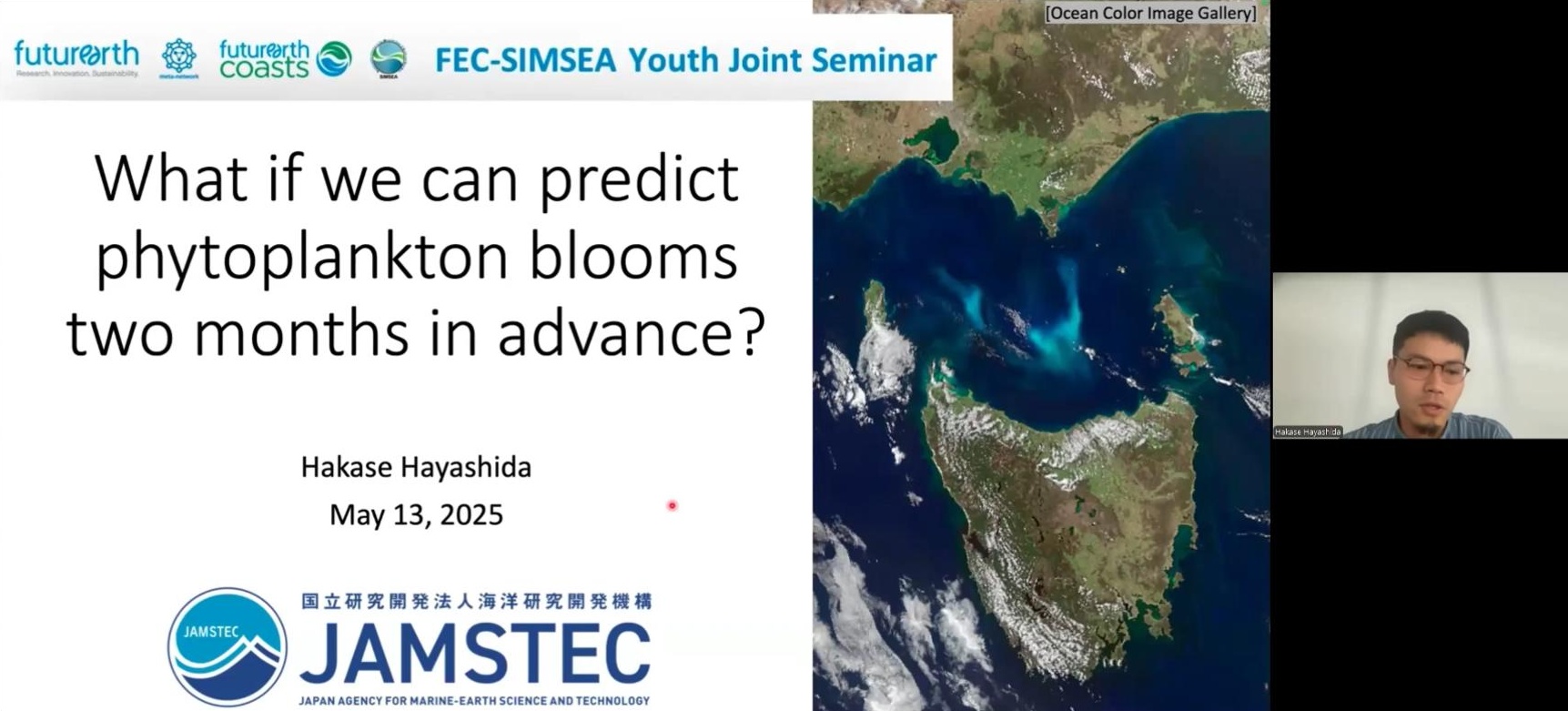
On May 13, 2025, the FEC-SIMSEA youth joint seminar featured Dr. Hakase Hayashida from JAMSTEC, who delivered an insightful presentation on the potential for short-range forecasting of phytoplankton blooms using operational ocean models. As part of the Future Earth Coasts and SIMSEA Meta-Network youth seminar series, this session spotlighted cutting-edge efforts to integrate marine biogeochemistry into ocean prediction systems.
Dr. Hayashida introduced the Japan Coastal Ocean Predictability Experiment (JCOPE), an operational system that has been providing two-month forecasts of temperature, salinity, and ocean currents in the northwest Pacific since 2001. He outlined how JCOPE assimilates real-time data from satellites, ships, and Argo floats to produce high-resolution predictions that support ship navigation, fisheries, and aquaculture industries.
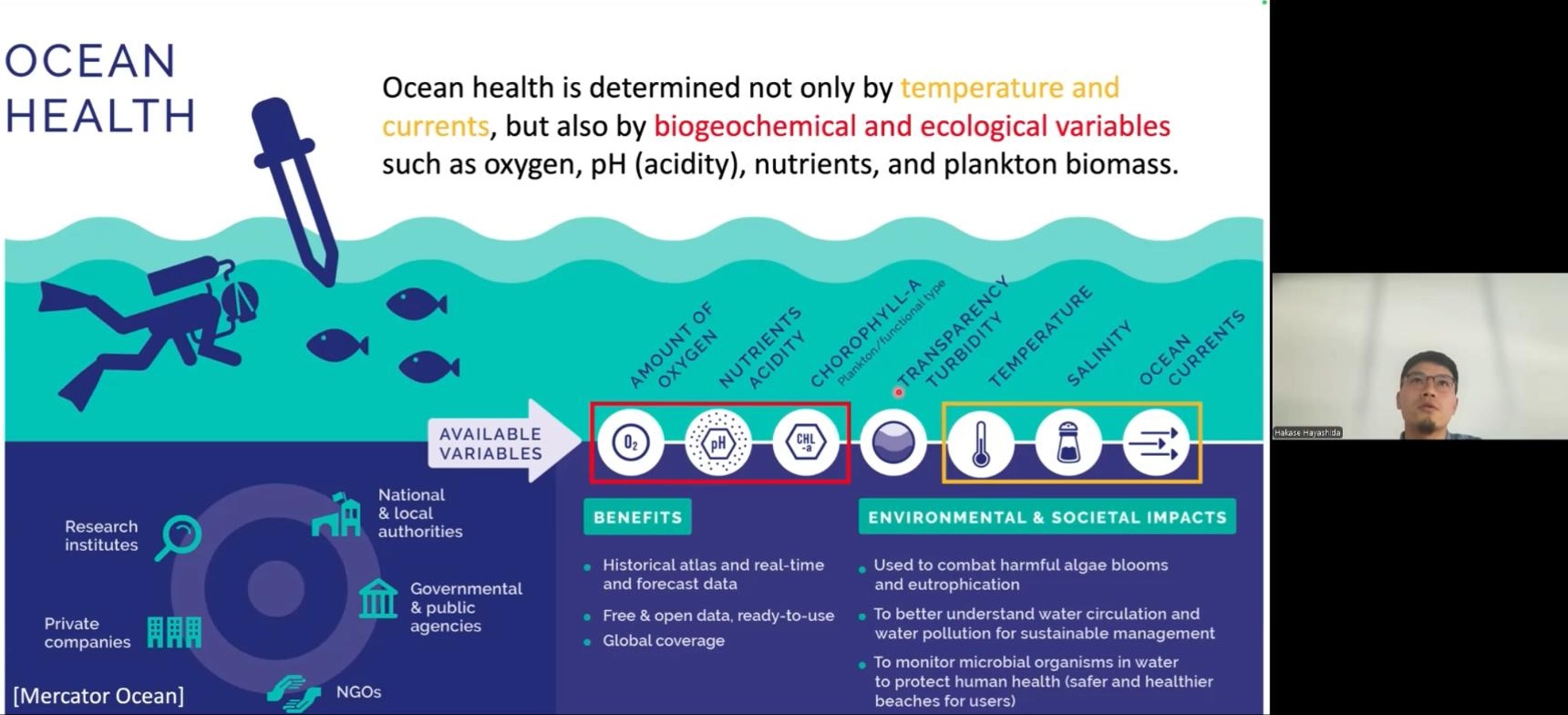
The seminar focused on expanding JCOPE to simulate ecosystem-relevant variables such as nutrient levels, phytoplankton biomass, dissolved oxygen, and pH. A key innovation discussed was the use of BGC-Argo floats, autonomous instruments that collect biogeochemical data and transmit near real-time profiles from depths down to 2,000 meters. Dr. Hayashida emphasized the significance of these emerging tools for improving ecosystem health forecasting, particularly in support of sustainable coastal management.
Participants raised critical questions on data availability in marginal seas, the integration of alternative observation systems, the potential use of AI in enhancing forecast accuracy, and a further role of atmospheric input in the coastal ocean biogeochemistry. Discussions also touched on the need for expanded regional deployments, interdisciplinary collaboration, and applications for local communities such as fishers and aquaculture operators.
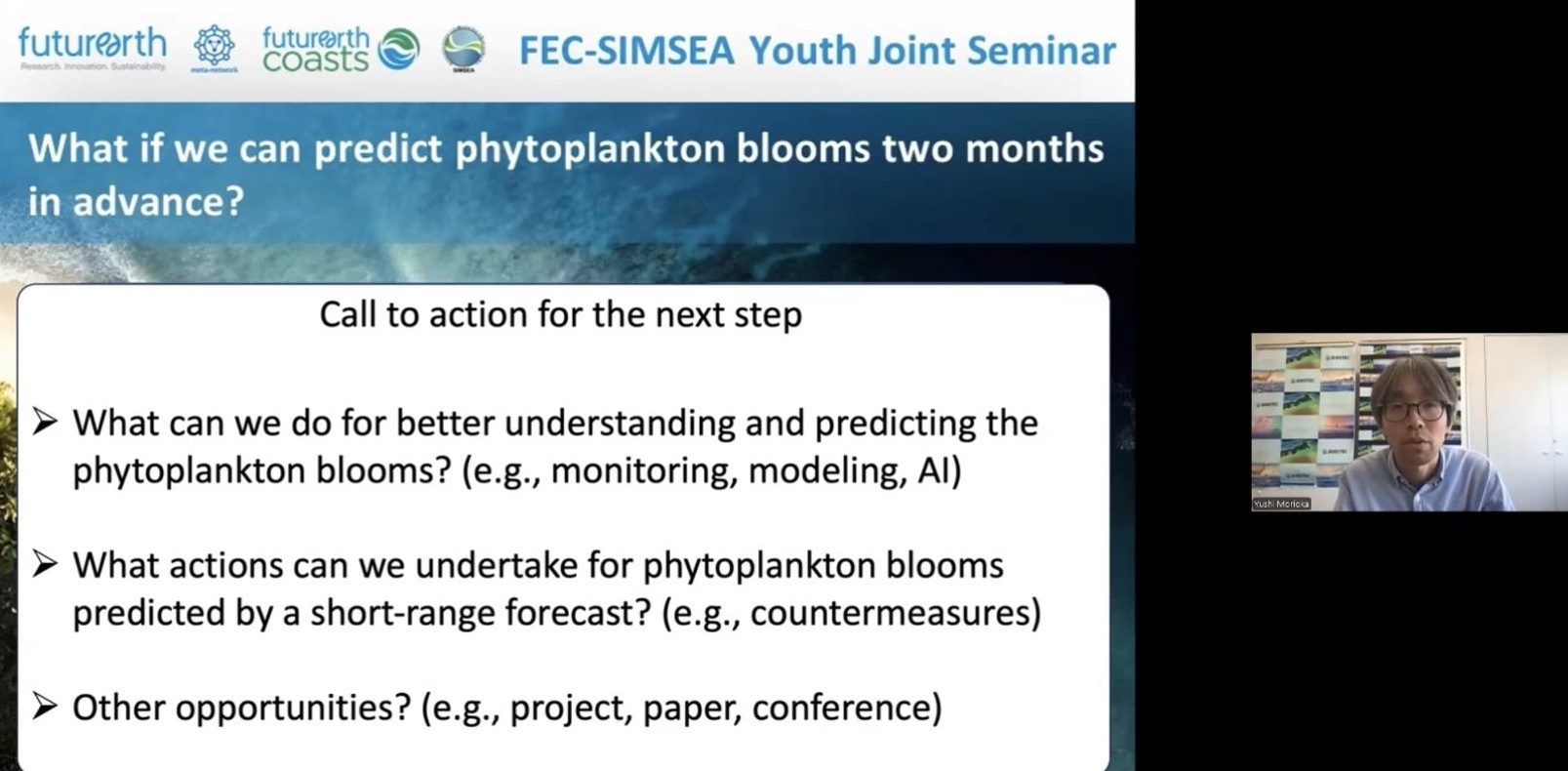
The seminar concluded with a call for collaborative actions, including joint monitoring projects, review publications, and broader stakeholder engagement. One suggestion from the audience was made to connect with blue economy initiatives in Australia and the wider Kuroshio current region. The session underscored the growing relevance of biogeochemical forecasting for both research and real-world applications and reaffirmed the importance of linking predictive science with end-user needs in the region.