
Future Earth Coasts (FEC) hosted an international webinar on July 5 focused on the artificial cultivation and ecological restoration of estuarine and coastal mangrove wetlands. Moderated by FEC Co-Executive Director Xiaoyu, the event brought together leading scientists and practitioners from China, Ghana, and Australia for a timely discussion on advancing coastal resilience through mangrove restoration. More than 60 participants joined the webinar to share region-specific challenges and innovations, identify transferable practices in science and engineering, and explore collaborative opportunities in research, technology exchange, and capacity building to protect and restore vital mangrove ecosystems.
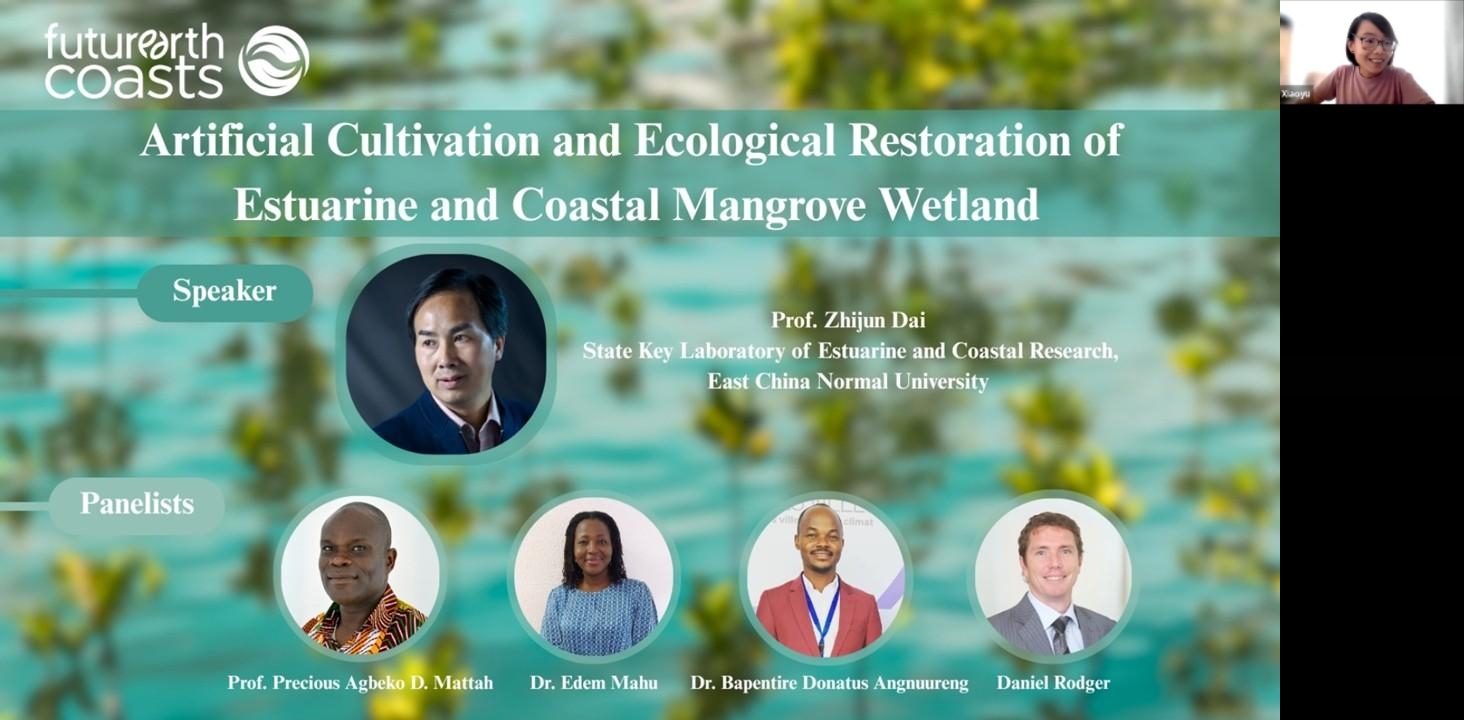
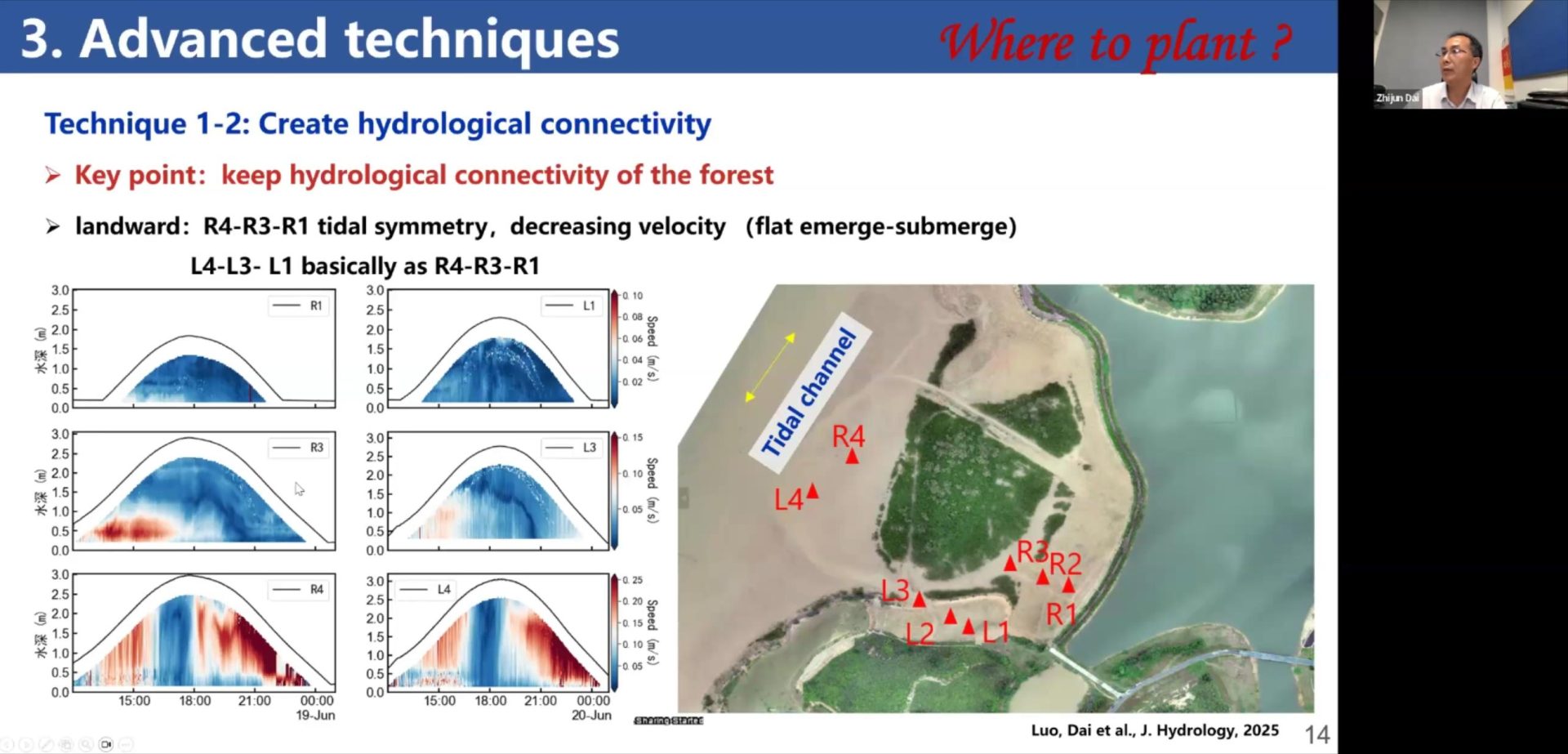
Professor Zhijun Dai of East China Normal University shared innovative approaches to mangrove artificial cultivation and ecological restoration developed by his team at the State Key Laboratory of Estuarine and Coastal Research. Emphasizing mangroves’ vital role in coastal protection and blue carbon storage, he outlined key threats such as sea-level rise, alien species invasion, and tidal flat reclamation. His team worked out cost-effective techniques, like deposit-promoting through bamboo project, hydrological connectivity creation, close to nature seeding and aggregated structure planting, the survival rate of mangroves reached 95% in the trial zones. Backed by two decades of research and over 20 patents, their work offers a model for mangrove rehabilitation worldwide.
At the panel’s start, Ghanaian experts highlighted severe mangrove loss – one-third gone in a decade – due to fuelwood harvesting, agriculture, urban growth, and land conflicts. Professors Edem Mahu and Precious Mattah pointed to challenges like low public awareness, dam-related hydrological changes, limited technology, and funding gaps. Dr. Donatus Angnuureng emphasized erosion and pollution threats, urging stronger community involvement and education. The panel showcased grassroots solutions linking restoration with livelihoods such as shellfish farming, citizen science, women-led efforts, and indigenous knowledge transfer. Success stories like the REDO Project and youth programs illustrated effective co-management, while community-driven initiatives in western Ghana are reversing degradation through restoration nurseries, drama, and sustainable harvesting.
Australian coastal engineer Dan Rodger highlighted the country’s shift toward nature-based solutions for managing coastal erosion and enhancing mangrove resilience. Unlike Ghana, where local harvesting drives mangrove loss, Australia’s degradation largely results from coastal development, leaving infrastructure vulnerable to erosion and sediment depletion. Rodger noted that ecological approaches are gaining ground, but engineering interventions often come too late – after significant damage occurs. To address this, Australia is adopting hybrid techniques like rock fillets and bamboo baskets to restore sediment balance and encourage natural mangrove regeneration. He emphasized that these adaptive strategies offer valuable lessons for global restoration, especially when shared through collaborative networks like FEC.
In the closing segment, panelists emphasized key opportunities for global collaboration, focusing on knowledge exchange, joint innovation, and community engagement. They highlighted the importance of transparency by sharing lessons from failures to enhance restoration efforts worldwide. Learning from experiences in restoring mangroves in non-traditional areas was noted as particularly relevant for regions facing coastal erosion, alongside the potential to adapt innovative planting techniques developed elsewhere to local, challenging conditions. Calls were made for stronger cross-institutional collaboration to accelerate the adoption of new technologies. The discussion also stressed the need to integrate community benefits such as ecotourism – reinforcing that resilient mangrove ecosystems must be both ecologically sustainable and socially supported.
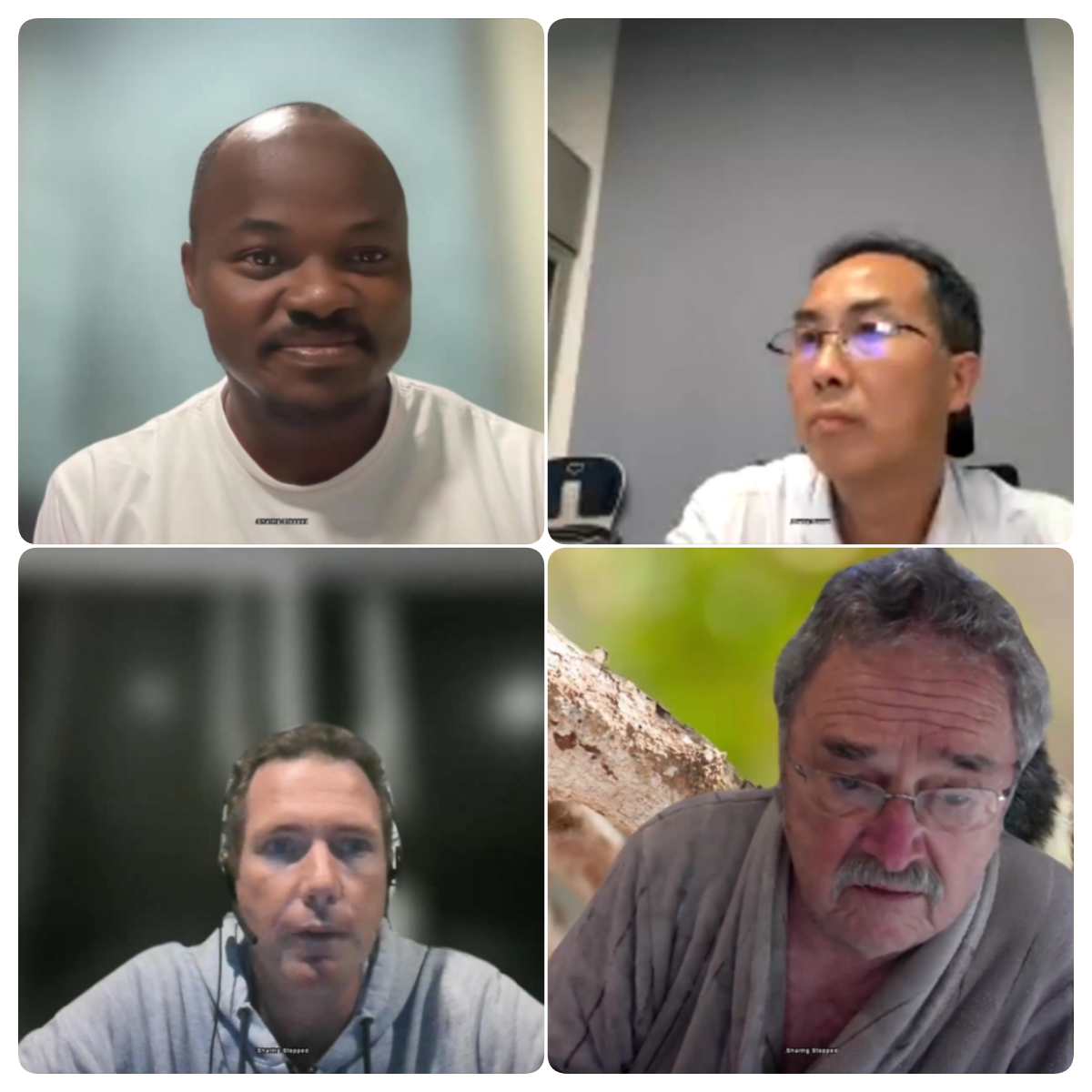
As the webinar concluded, FEC reaffirmed its role as a global catalyst for mangrove restoration – connecting experts, communities, and partners to accelerate collaboration, innovation, and knowledge exchange. With a focus on uniting efforts across borders, FEC is committed to advancing resilient mangrove ecosystems – ensuring these vital coastal habitats thrive for generations to come.
This Webinar is part of the Future Earth-funded cross-cutting initiative “Building Future Leadership: A Coastal Sustainability Value Chain” – an initiative designed to tackle coastal challenges by cultivating leadership among Early Career Ocean Professionals (ECOPs) and integrating Indigenous knowledge.